


The second call for proposals from the Galápagos Life Fund begins on December 1, 2025, and closes on February 2, 2025.
The GLF invites the community, as well as interested entities such as associations, private universities, and private companies, to apply for funding for their projects through the submission of a Concept Note. If your Concept Note is accepted, you will be invited to develop and submit a full proposal.
Concept Notes must focus on marine and coastal conservation in Galápagos and be aligned with the Fund’s priorities, which for this call include: sustainable fisheries initiatives, marine research, sustainable tourism, education and community outreach.

Opening date: 2025-12-01
Closing date: 2026-02-02
Project proposals may be submitted by individuals or legal entities. Legal entities must have been legally constituted and operating in Galápagos for a minimum of two consecutive years, maintaining an established office in the islands during that period. Individuals may submit proposals only if they are permanent residents of Galápagos; in such cases, eligibility is limited exclusively to Small Grants.

Permanent resident individuals of Galápagos
Local associations and community institutions
Private academic or educational institutions
Private companies
NGOs
Other institutions working towards marine conservation
Applicants may apply for funding under any of the three (3) grant categories:
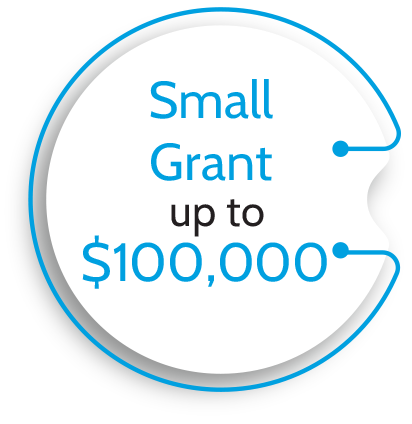
Small Grant:: Up to $100,000. The maximum grant duration is 12 months. Co-financing is not mandatory, but in-kind co-financing is recommended.
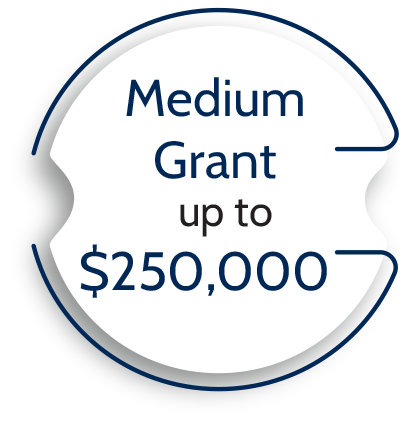
Medium Grant:: Up to $250,000. The maximum grant duration is 24 months. Co-financing equivalent to 10% of the amount requested from the Fund must be provided
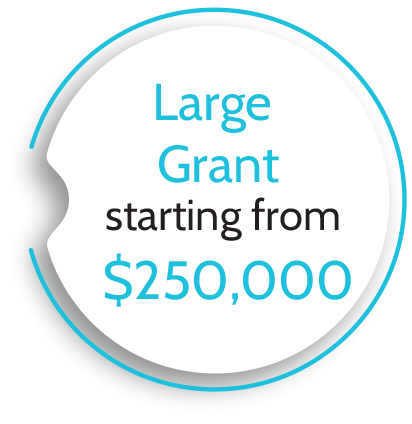
Large Grant:: Starting from $250,000. The maximum grant duration is 36 months. Co-financing equivalent to 25% of the amount requested from the Fund must be provided.
The Galápagos Life Fund aims to promote greater inclusivity and ensure that all users and stakeholders have access to resources. Please note that permanent residents of Galápagos applying as individuals are eligible only for Small Grants.
Individuals and organizations interested in applying must review the Grant Procedures Manual and fully complete the Concept Note Template.
Applicants must ensure that the Concept Note does not exceed six (6) pages. There is no specified word limit, but the document must use Times New Roman, size 11, single spacing, and the margins provided in the template. Do NOT modify the provided template.
Applications can be submitted until February 2, 2026, at 23:59 UTC-6. Concept Notes received after this date and time will be rejected. Applicants will receive an email confirming the receipt of their Concept Note upon submission.
The application process consists of two stages. Click on Stage 1 to view the detailed steps:
Step 1:Verify your eligibility and the required documents to apply: Concept Note Template, Annex 2: Initial Environmental and Social Risk Screening, Project Selection Criteria.
Step 2: Prepare a Concept Note.
Step 3: Gather the required documentation.
Step 4: Submit your complete application using the following form
Preselected concept notes will prepare a full proposal using the GLF format.
The dates are approximate and subject to change.

2025-12-01
Start of the call for proposals.
2025-12-08
Informative workshop in Santa Cruz.
2025-12-09
Informative workshop in San Cristóbal.
2025-12-12
Informative workshop in Isabela
2025-12-18
Informative webinar about the Call for Proposals.
2026-01-07
Webinar on Concept Note preparation
2026-02-02
Closing of the Call for Proposals.
1. Local organizations or institutions with a RUC registered in Galápagos that have operated continuously in the province for at least the past two years. This includes private academic or educational institutions, private companies, NGOs, and other organizations working in the conservation sector.
2. Individuals who are permanent residents of the province of Galápagos. Please note, individuals may only apply for a small grant.
The priority funding areas for this second call are:
- Sustainable fisheries
- Sustainable tourism
- Environmental education and community outreach
- Research
Note: All projects must focus on marine and coastal conservation.
Yes. Virtual and in-person sessions will be held on the three islands to address questions about the application process. Dates will be available on our social media channels and website.
You may submit up to three proposals under this call, provided that each proposal corresponds to a different funding topic and meets all eligibility requirements.
Yes, joint proposals between institutions are allowed. In such cases, one institution must apply as the main implementing entity (applicant) and meet all eligibility requirements, while the others may participate as implementing partners.
This depends on the grant category. Large grants do not have a defined maximum limit; however, the amount requested should be consistent with the costs necessary to achieve the proposed objectives and feasible within a maximum implementation period of three years.
The Second Call includes a total available budget of:
• USD 900,000 for research projects
• USD 1,2 million for sustainable tourism projects
• USD 1 million for sustainable fisheries projects
• USD 800,000 for environmental education and community outreach projects
Yes. Private Ecuadorian universities are eligible to participate, provided they meet all requirements established under this call. Public or private universities that do not meet the eligibility criteria may still participate by partnering with an eligible entity that will act as the main implementing entity (applicant).
Only one person should be listed as the main implementing entity (applicant). This applicant will be responsible for:
- Signing the Grant Agreement.
- Overseeing project implementation and compliance.
- Maintaining a bank account for project fund management.
- Submitting technical and financial reports, including the final report.
- Ensuring compliance with Environmental and Social Safeguards (including grievances and complaints); and all GLF policies.
Other individuals must be listed in the proposal as part of the project implementation team.
Yes. Salaries must be included in the Concept Note budget under the item Honorarios (Fees). These roles must be directly related to project implementation, and the amounts must include all legally required benefits.
The total amount allocated to salaries and fees may not exceed 30% of the total amount requested from the GLF.
Yes. VAT must be included in all project costs (goods, services, consultancies, etc.). The total project budget must reflect these VAT costs.
As part of the application process, applicants must complete the Environmental and Social (E&S) Risk Screening. The purpose of this screening is to identify potential environmental and social risks and impacts of the project and to determine the project’s risk category.
Considering the time required for preparation, review, and approval, projects approved under this call are expected to begin activities approximately in the last quarter of 2026.
The six pages of the Concept Note exclude the annexes. Annexes are additional.
The total project budget is the sum of the amount requested from the GLF plus the co-financing amount.
However, in the activity-based and category-based budget matrix, please only include the values corresponding to the amount requested from GLF.
Yes. Individuals who are permanent residents of the province may apply, but only for a small grant.
Yes. For-profit private companies are eligible to apply for Galápagos Life Fund (GLF) funding, provided that the proposed project is non-profit in nature, delivers tangible community benefits, and is aligned with the Fund’s conservation objectives.
No. Public institutions are not eligible to apply under this call.
Of the Galápagos Life Fund (GLF) annual budget allocated to grants, 50% finances initiatives implemented by governmental entities. These funds are not awarded through open calls for proposals; instead, they are defined according to priorities established by the Government, in alignment with the GLF’s investment priorities. These resources are part of specific commitments and planning processes.
The remaining 50% is allocated to community-based projects through open calls for proposals, such as this one, and is directed exclusively to non-governmental actors, including organizations, academic institutions, collectives, and eligible individuals.
Join our newsletter!
Become part of a community committed to marine sustainability in the Galápagos Islands.