

Galápagos Takes a Historic Step Toward Environmental Noise Management
, August 7, 2026
For the first time, the islands of Santa Cruz and Baltra have a technical baseline on noise pollution, a tool that will provide a better understanding of how noise affects both biodiversity and the quality of life of the archipelago’s residents.
This progress was made possible by the project “Noise Pollution in the Coastal Ecosystems of the Santa Cruz and Baltra Islands,” led by biologist Jeiser Vernaza Valencia, the project director, and funded by the Galápagos Life Fund. The initiative involved SouthCorp as a technical and operational partner, led by Sebastián Romano, and over the course of a year combined scientific research, ongoing monitoring, and environmental education to lay the groundwork for more effective noise management in the Galápagos.
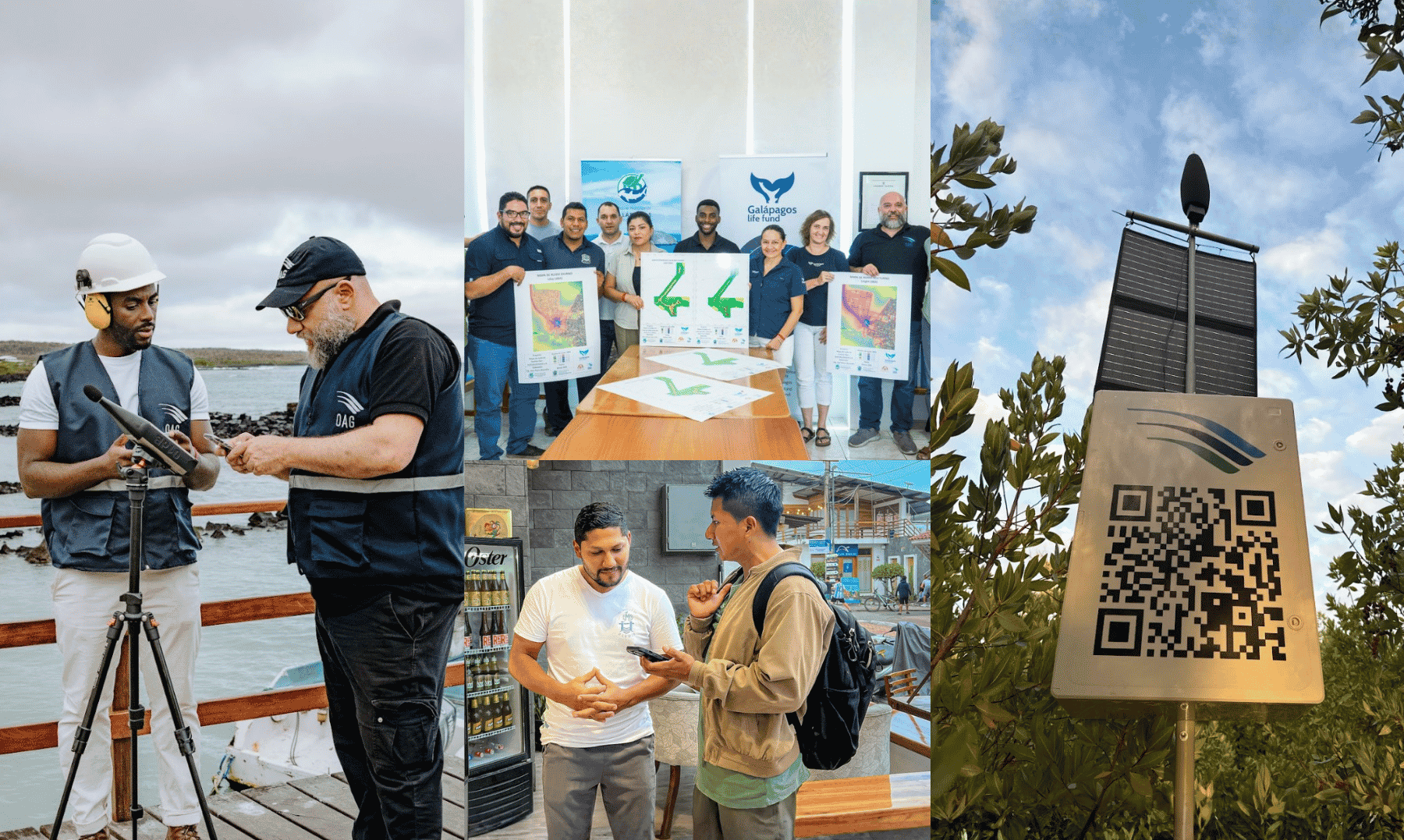
As a result, the project developed the first daytime and nighttime environmental noise maps of the islands of Santa Cruz and Baltra, based on 60 measurements taken at strategic locations such as the docks in Puerto Ayora and Baltra and the Elecgalápagos power plant, which were validated by a laboratory accredited by the Ecuadorian Accreditation Service (SAE). These maps were officially delivered to the Municipality of Santa Cruz and the Galápagos National Park Administration as a decision-making tool.
Another major achievement was the implementation of the Galápagos’ first permanent acoustic monitoring network, consisting of four stations that generate real-time data accessible to the public. This network will enable continuous monitoring of noise levels and strengthen the planning of mitigation measures.
Based on the information collected, the project also developed the Strategic Guidelines for Environmental Noise Management and Mitigation, which identify priority actions to address the main sources of noise pollution, including vehicular traffic, port activity, and electricity generation.
As part of the project, the Galápagos Acoustic Office (OAG) initiative was launched—a technical platform that integrates the tools, monitoring data, and information generated to support environmental noise management in the archipelago.

When Science Connects with the Community
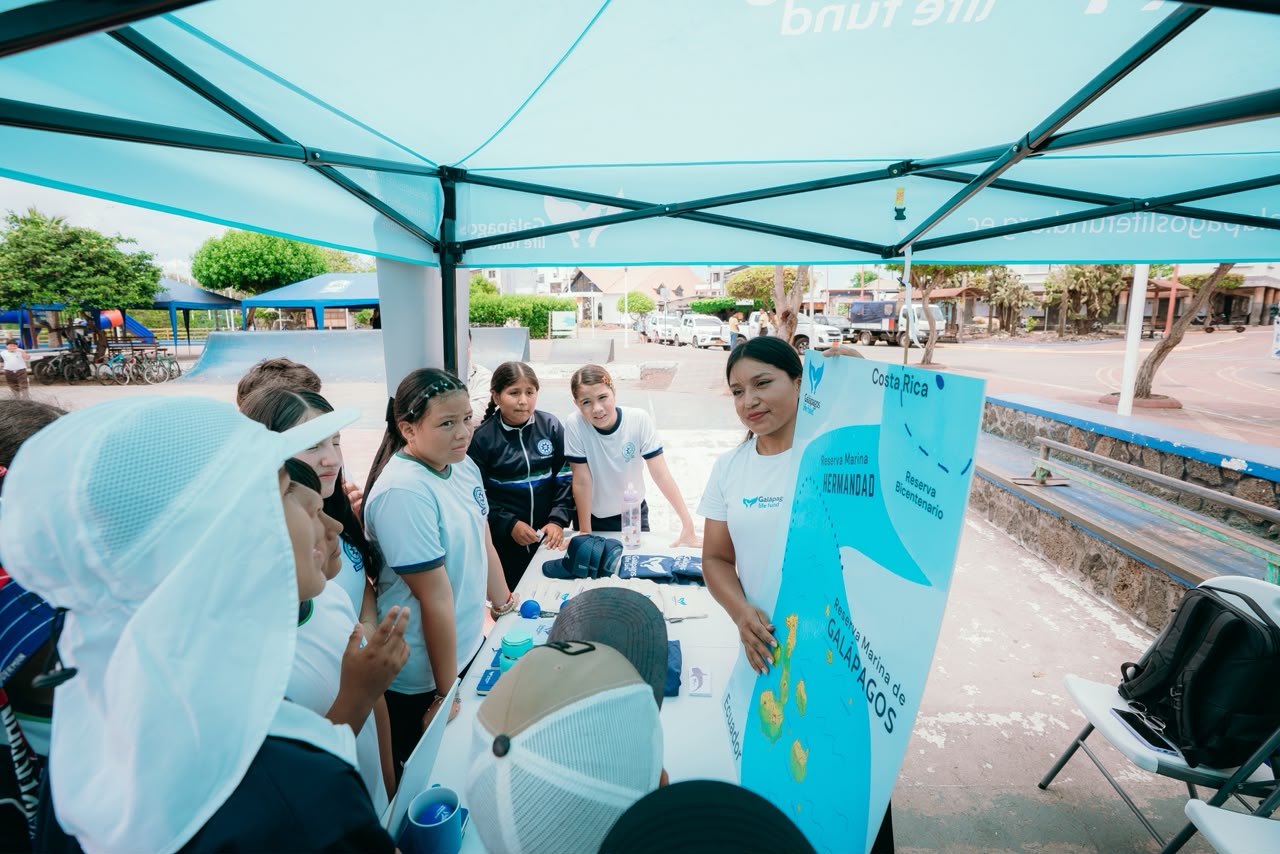
One of the most important components of the project was working with the public. Through 16 participatory activities, 500 perception surveys, and a communication campaign that garnered over 185,000 views and interactions, the project succeeded in bringing a little-known issue into the public conversation.
A key element in this process was the use of a decibel meter during community activities. By observing in real time how noise levels increased when speaking, shouting, or clapping, people immediately understood a problem that is normally difficult to explain using technical concepts.
This shift was also reflected in the final results: 98.3% of those surveyed acknowledged that noise affects biodiversity and quality of life, while 100% considered it necessary to implement measures to reduce this impact.
Although it often goes unnoticed, noise pollution is an environmental stressor that affects both ecosystems and people. Noise from any human-made source alters the natural soundscape, can interfere with wildlife communication, orientation, and behavior, and also affects the well-being and quality of life of the archipelago’s inhabitants. Understanding how this noise is distributed is the first step toward managing it and reducing its impacts.
A project that builds capacity for the future
The project concluded with 100% achievement of its indicators and full execution of the grant awarded by the Galápagos Life Fund.
Among the upcoming challenges are ensuring the sustainability of the permanent acoustic monitoring network and consolidating the Galápagos Acoustic Office as a technical resource to support the Municipality of Santa Cruz and the Galápagos National Park Directorate in periodically updating noise maps and expanding this methodology to other islands in the archipelago.
For the Galápagos Life Fund, initiatives like this demonstrate that generating scientific information, strengthening local capacities, and promoting citizen participation are essential elements for building conservation solutions that will stand the test of time.
Learn more about the project https://galapagoslifefund.org.ec/glf_proyectos/noise-pollution-in-coastal-ecosystems/
Related Content
-
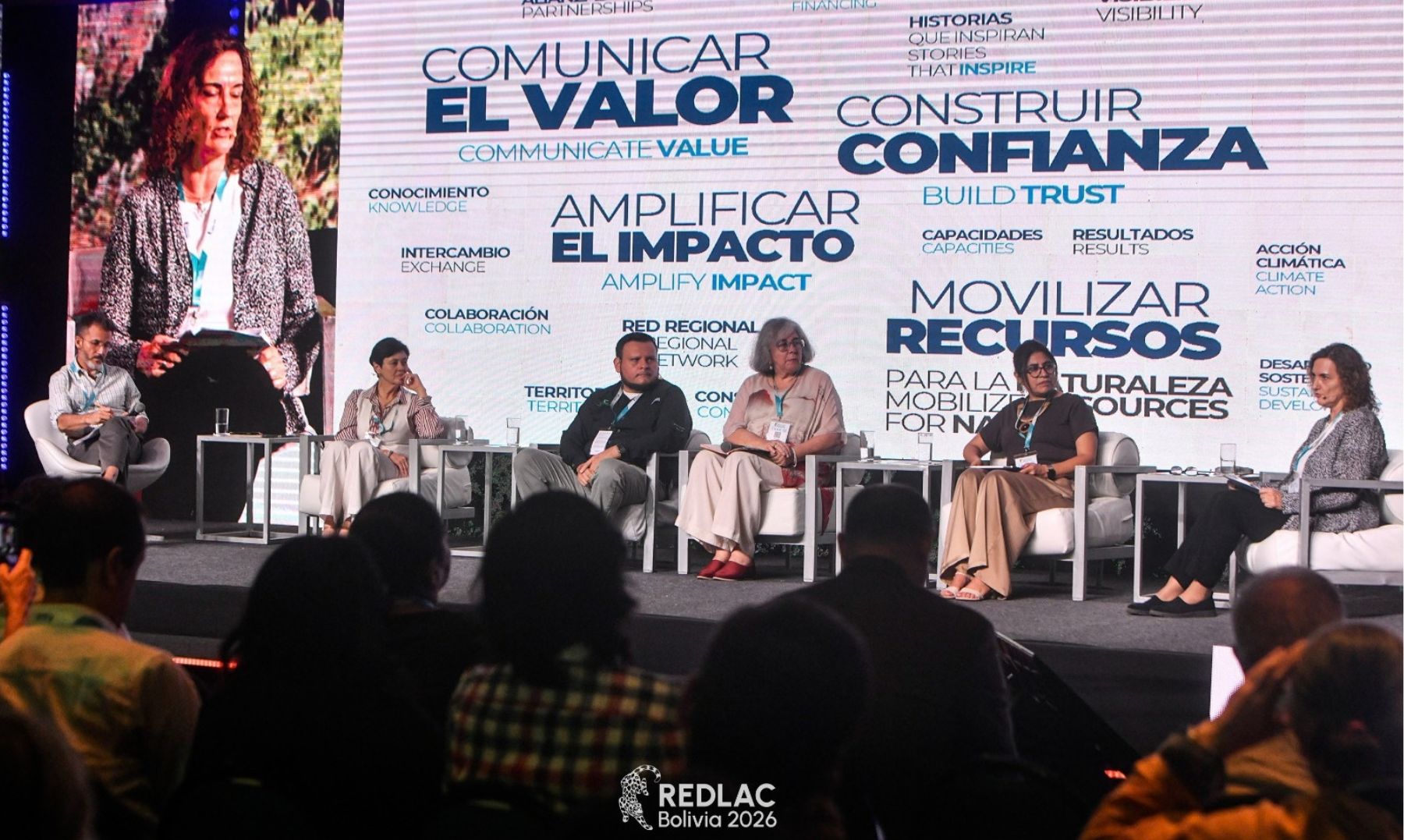
GLF Shares Its Experience at the 28th RedLAC Congress
Read More... -
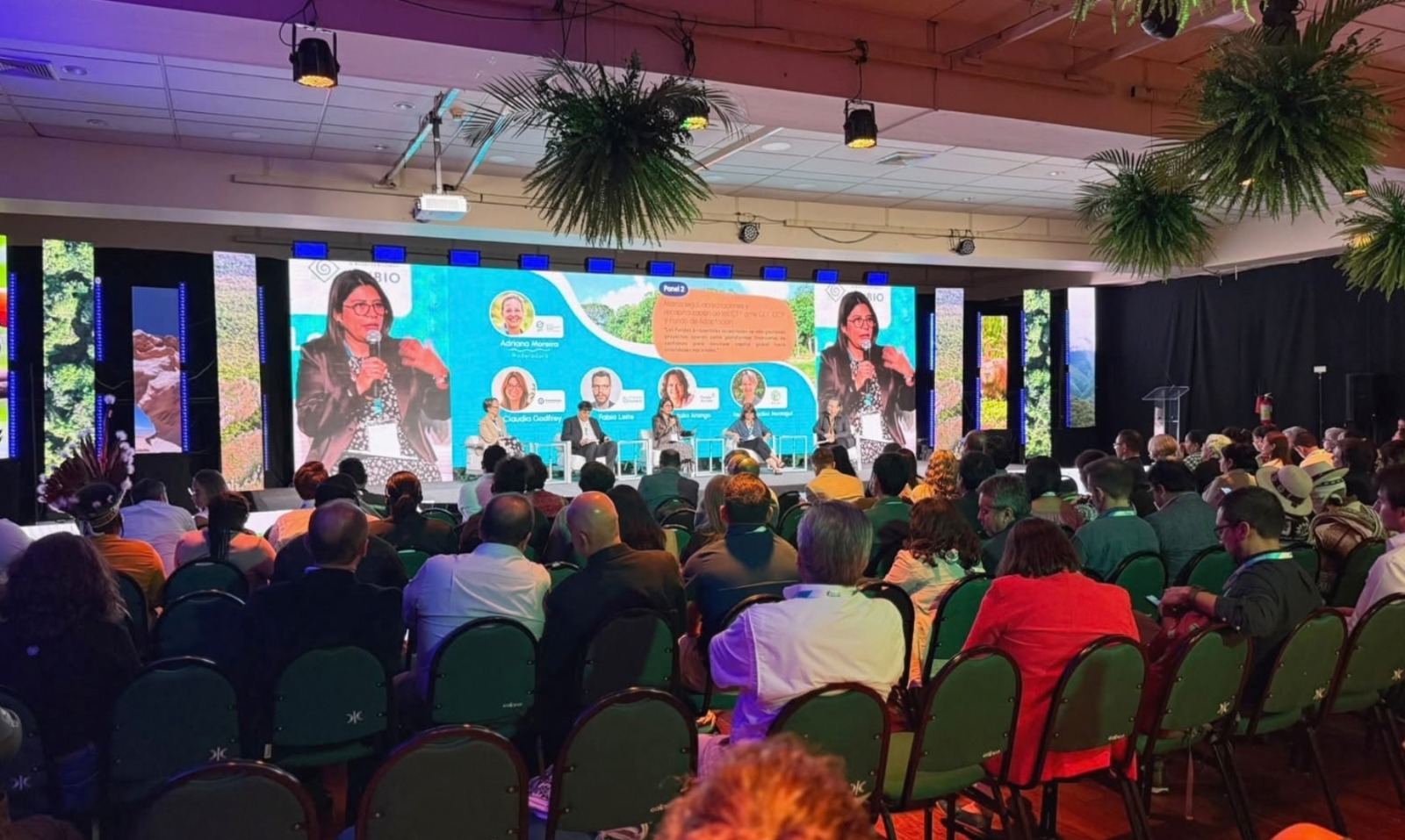
GLF Participates in the 28th RedLAC Congress in Bolivia
Read More... -
Connecting Our Projects with the Community
Read More