
Conservation and the Circular Economy
Xavier
A Ruler that used to be a Plastic Bottle Cap
Through this project, young people are learning how much effort goes into making an item as simple as a ruler.

 Puerto Ayora, Santa Cruz
Through this project, young people are learning how much effort goes into making an item as simple as a ruler.
Puerto Ayora, Santa Cruz
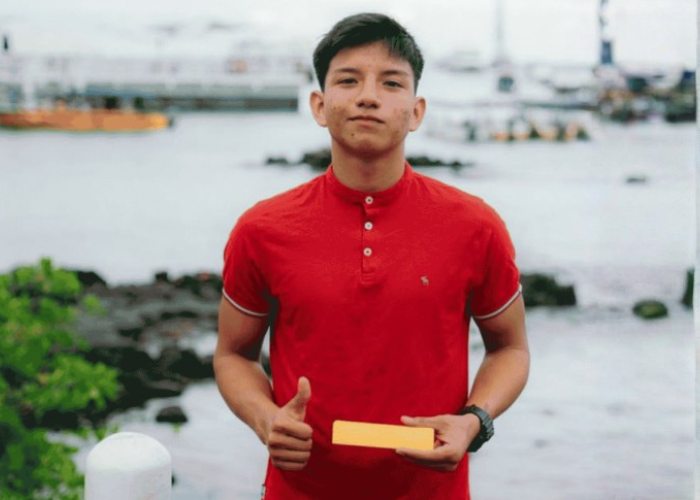
For 15-year-old Xavier Baque, a ruler was simply another item among the school supplies he carried to class—until he learned how much work can go into something so ordinary.
It all began with a simple question: What can we do with the plastic we throw away?
He found the answer by participating in the Galápagos PlastiLab project, an initiative implemented by the Galápagos Ecological Airport and Fundación Proyecto Social. The project gave students from Santa Cruz and other islands the opportunity to learn how to recover plastic waste and transform it into new objects. What sparked Xavier’s curiosity most was discovering that something that would normally end up in the trash could be given a second life and return to their own hands as rulers, protractors, pen holders, or clipboards.
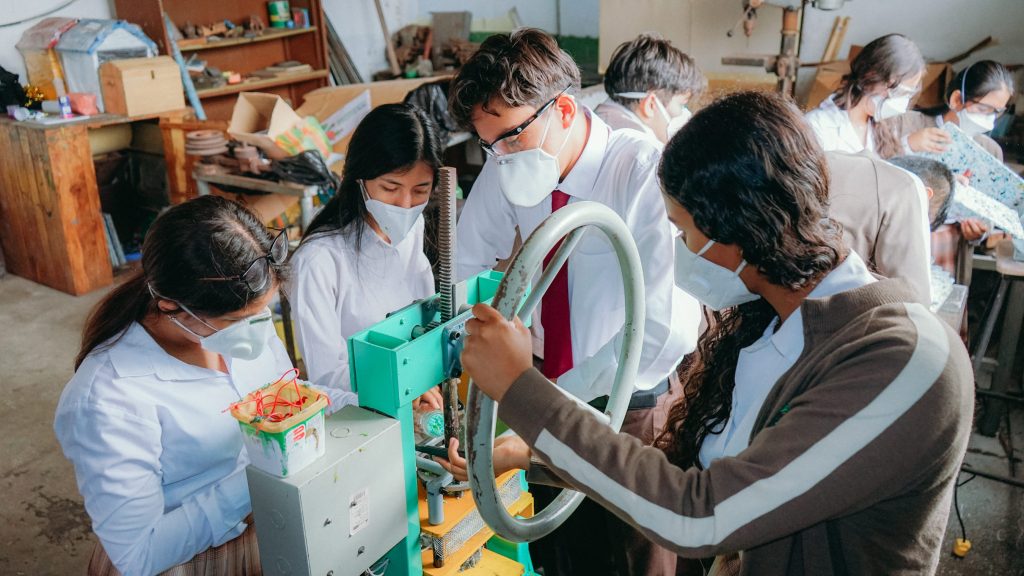
Xavier became particularly involved in operating the machinery. After class, during recess, or whenever he had a free period, he would join other students to work on the project. But the process began long before that.
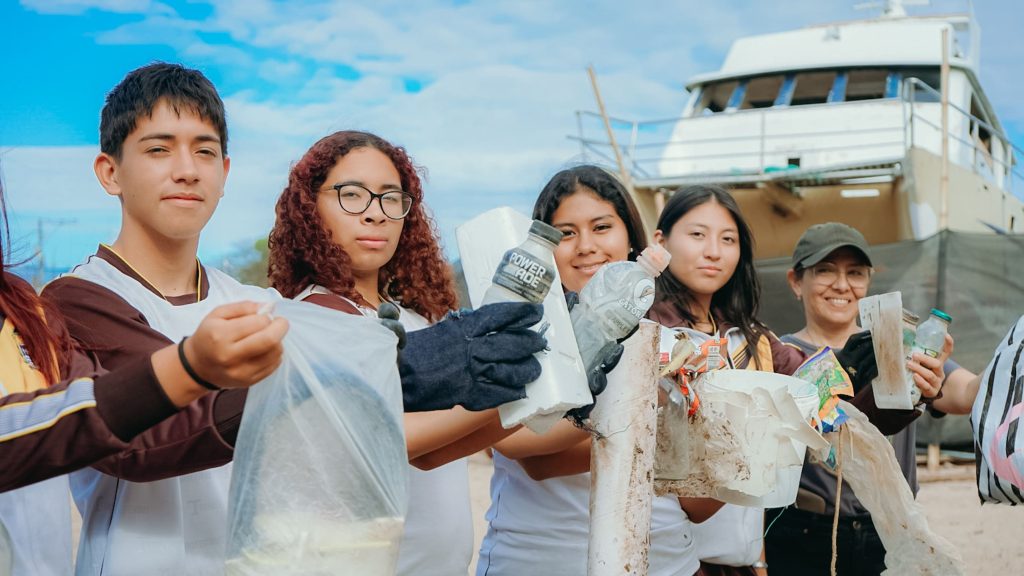
First, they had to collect plastic bottle caps marked with the number 5, which identified the type of plastic the machines could process. Some were brought in by students who collected waste that had accumulated on beaches after being carried there by ocean currents. Others came from local shops and school collection drives, where bottle caps were sometimes exchanged for small incentives. Then came the transformation process.
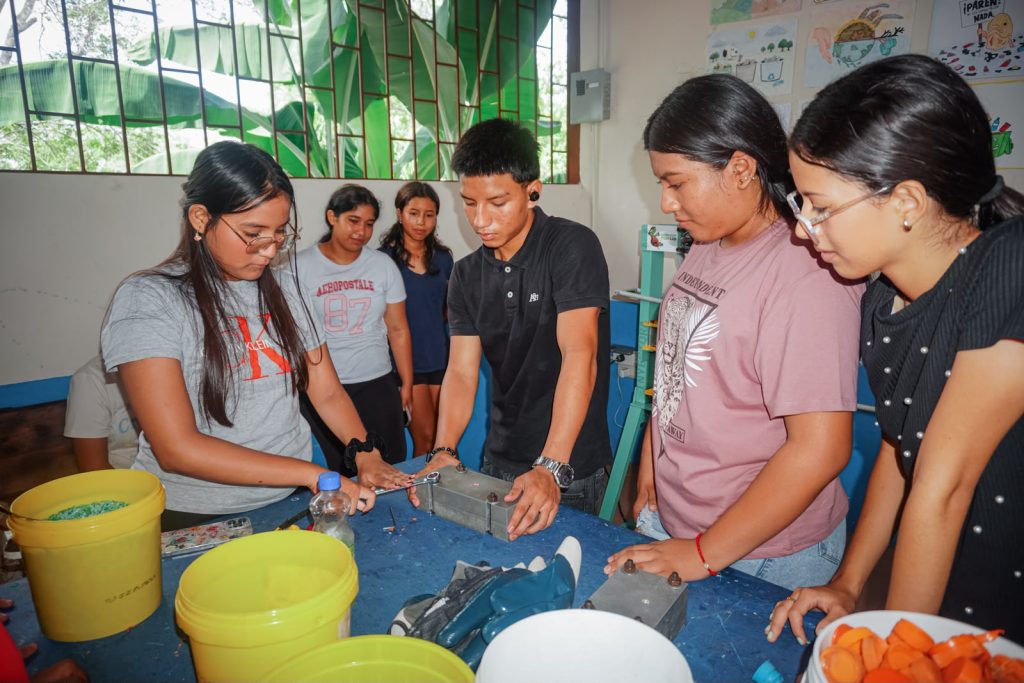
The caps were cleaned, sorted, and fed into a shredder, which reduced them to small pieces. Xavier helped cut and separate the material before placing it in an injection-molding machine, where the plastic was heated until it melted and could be poured into different molds. New objects emerged from the process.
Approximately 30 bottle caps could be used to make four rulers.
The process for making clipboards was different: the shredded plastic was fed into another machine to create a flat sheet that, once cooled and trimmed, could be reused as a school supply.
For Xavier, however, the most important lesson was not simply learning how the machines worked.
“Some went to the beaches, others visited local shops, and others worked with the machines, but we all received school supplies.”
- Xavier
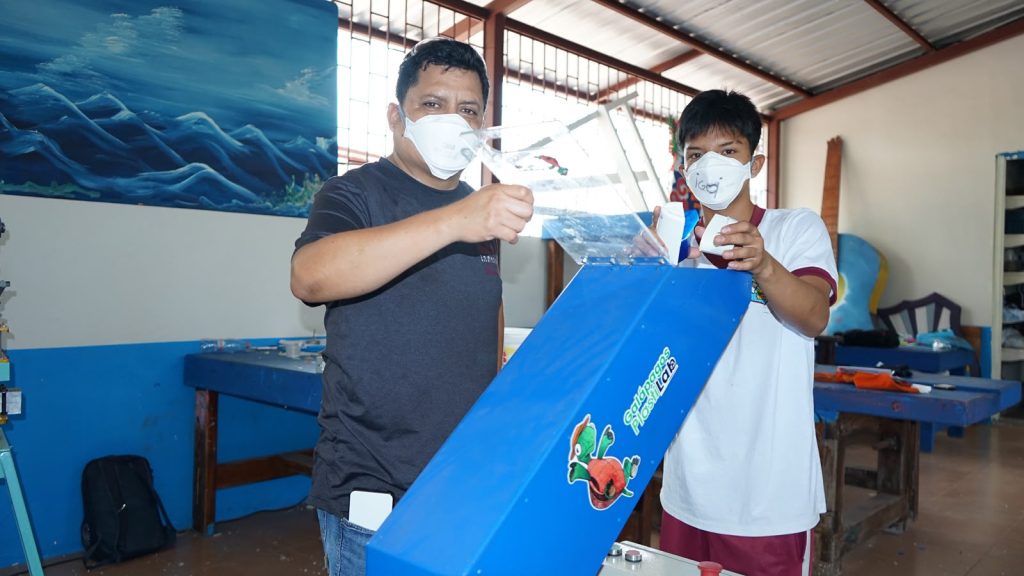
“Through this project, young people are learning how much effort goes into making an item as simple as a ruler.”
Taking part in the entire process changed the way he saw objects that had once seemed insignificant. A ruler was no longer just a ruler. Behind it were people collecting bottle caps, classmates sorting them, students cleaning the plastic, and others learning how to operate the machines to create a new product.
Each student could contribute in a different way. “Some went to the beaches, others visited local shops, others worked with the machines, and in the end, we all received school supplies,” he recalls.
For Xavier, that was another valuable part of the experience: everyone benefited. While helping prevent more plastic from polluting the environment, the students themselves received objects they could use in their schoolwork.
Now imagine what else could be made. Xavier already has.